


CNC Operators: Your Smartest Manufacturing Investment
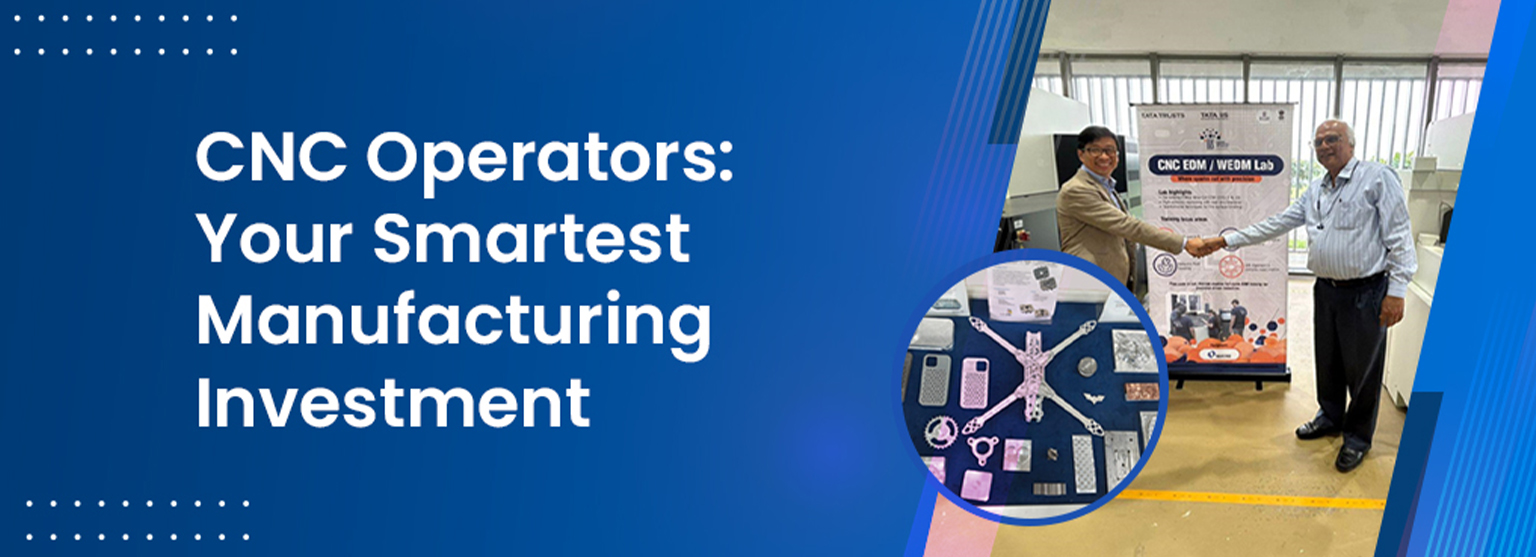
Many manufacturing firms fail to reach their full potential, not because they lack technology, but because they underestimate one critical role: the skilled CNC (Computer Numerical Control) operator.
While machines dominate headlines, it’s the human expertise behind the controls that truly transforms a production line. A trained CNC operator doesn’t just ‘run’ equipment; they elevate efficiency, precision, and profitability.
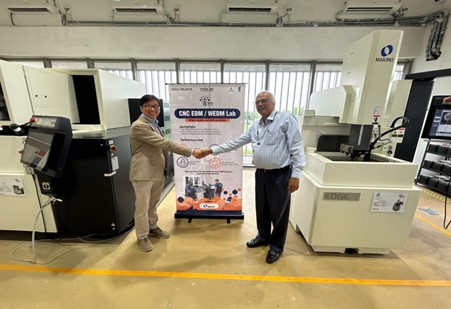
Here’s why hiring or training a CNC operator through the Tata Indian Institute of Skills (Tata IIS) is a strategic move for future-ready manufacturing.
Precision and Consistency: The Foundation of Efficiency
At the heart of efficient manufacturing lies precision. In skilled hands, CNC machines can achieve accuracy up to 0.0001%, minimising errors, rework, and material waste.
In sectors like automotive, where components such as engine parts and transmission gears demand perfect tolerances, skilled operators ensure parts are made right the first time, reducing scrap and keeping production lines seamless.
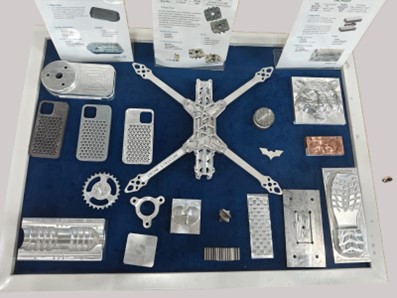
Studies confirm that companies improving CNC efficiency can reduce material waste by up to 30%, resulting in lower costs, better product quality, and higher customer satisfaction.
Scaling Production Without Expanding Workforce
Traditional machining limits one operator to a single machine. Skilled CNC professionals, however, can oversee multiple machines simultaneously, dramatically boosting output.
In electronics manufacturing, for instance, a single expert can manage several CNC setups producing smartphone components, enhancing productivity by over 20% without additional labour.
This intelligent scaling empowers manufacturers to meet rising demand while maintaining cost efficiency and workforce balance.
Mastering Complex Designs with Precision
Industries like aerospace, medical devices, and electronics rely on parts with intricate geometries and tight tolerances that only CNC operators can handle effectively.
Using advanced CAD/CAM software, they translate digital blueprints into tangible precision components. In aerospace manufacturing, operators craft complex parts like turbine blades and engine components, jobs that are impossible through manual machining.
Such capabilities help manufacturers win high-value contracts and gain a competitive edge in industries where innovation and accuracy define success.
Minimising Downtime and Keeping Operations Smooth
Every minute of downtime equals lost revenue. Skilled CNC operators serve as the first line of defence, monitoring machine performance, calibrating tools, and executing preventive maintenance to ensure continuous operations.
In sensitive industries like medical device production, even a short disruption can delay critical deliveries. Trained operators identify issues early, preventing costly delays.
With modern data-driven monitoring systems, companies can cut unplanned downtime by up to 15%, improving machine availability and production consistency.
Cost-Effectiveness Through Expertise
CNC machines represent a major investment, but their return on investment (ROI) depends heavily on operator skill. Competent operators optimise cutting speeds, tool paths, and scheduling, extending tool life and reducing waste.
In high-volume operations, these refinements deliver measurable gains in productivity and cost savings. The result is a continuous improvement cycle, boosting long-term profitability while maintaining quality.
Safety and Compliance: Protecting People and Production
CNC equipment operates at high speeds and power levels, requiring disciplined safety standards. Skilled operators follow stringent protocols to prevent accidents and comply with industrial regulations.
In automotive manufacturing, operators ensure calibration accuracy, maintain safety guards, and adhere to all compliance norms, reducing workplace risks, legal liabilities, and downtime.
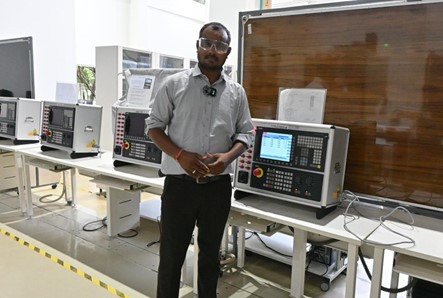
By prioritising safety, CNC operators foster a secure and compliant work environment, crucial for sustainable industrial success.
Future-Proofing Manufacturing with Smart Skills
As automation, AI, and IoT reshape manufacturing, CNC operators are evolving into innovation enablers.
An operator trained in IoT-enabled systems can connect machines to the cloud, analyse performance in real time, and dynamically adjust production schedules. This blend of human expertise and digital intelligence ensures manufacturers stay competitive in an increasingly automated world.
CNC professionals are thus future-proofing manufacturing, helping industries transition smoothly into the era of smart factories and predictive production.
Tata IIS: Your Gateway to a CNC Career
For individuals eager to enter this high-demand field, Tata Indian Institute of Skills (Tata IIS) offers a comprehensive CNC Operations course designed to match global manufacturing standards.
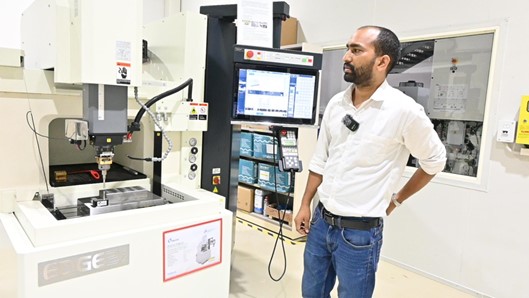
Highlights of the Tata IIS CNC Program
- Industry-Focused Training: In-depth modules in CNC programming, machine operation, and process optimisation.
- Real-World Exposure: Industrial visits, guest lectures from industry experts, and hands-on training in modern manufacturing environments.
- Placement Support: Dedicated assistance connecting graduates with top recruiters in the manufacturing sector.
- Practical Learning: Live project simulations mirror actual industrial challenges, ensuring graduates are job-ready from day one.
By blending technical rigour with experiential learning, Tata IIS equips learners with both confidence and competence to thrive in competitive industrial roles.
Final Word
Hiring or becoming a skilled CNC operator isn’t just a staffing decision; it’s an investment in precision, efficiency, and future readiness.

CNC operators transform sophisticated machines into engines of performance and profitability. They reduce costs, ensure safety, and enable scalability, all while driving innovation.
In today’s fast-evolving manufacturing world, a skilled CNC operator is a catalyst for excellence.
FAQs
Tata IIS offers a short, comprehensive course in CNC operations with several key benefits, like industry-linked training, and witness practical experience through real-world industrial visits. Learning from industry experts who share valuable insights. Dedicated assistance in securing job opportunities after completion of the course. Work on live projects that simulate real manufacturing scenarios, enhancing your skills and confidence.
Upon completing CNC operator training, you can pursue a wide range of job roles such as:
- CNC machine operator
- CNC programmer
- Production supervisor
- Maintenance technician
- Tooling specialist
Becoming a CNC operator typically requires hands-on training. Enrolling in a specialised CNC training program is a good place to start. For example, the Tata IIS CNC course offers comprehensive training that includes industrial visits, expert guest lectures, and placement support to ensure you’re ready for the workforce.
One needs to apply to the website of the chosen location – IIS Mumbai, IIS Ahmedabad – after which there will be an entrance test. If you succeed, your admission will be confirmed by paying the minimal admission fees.


